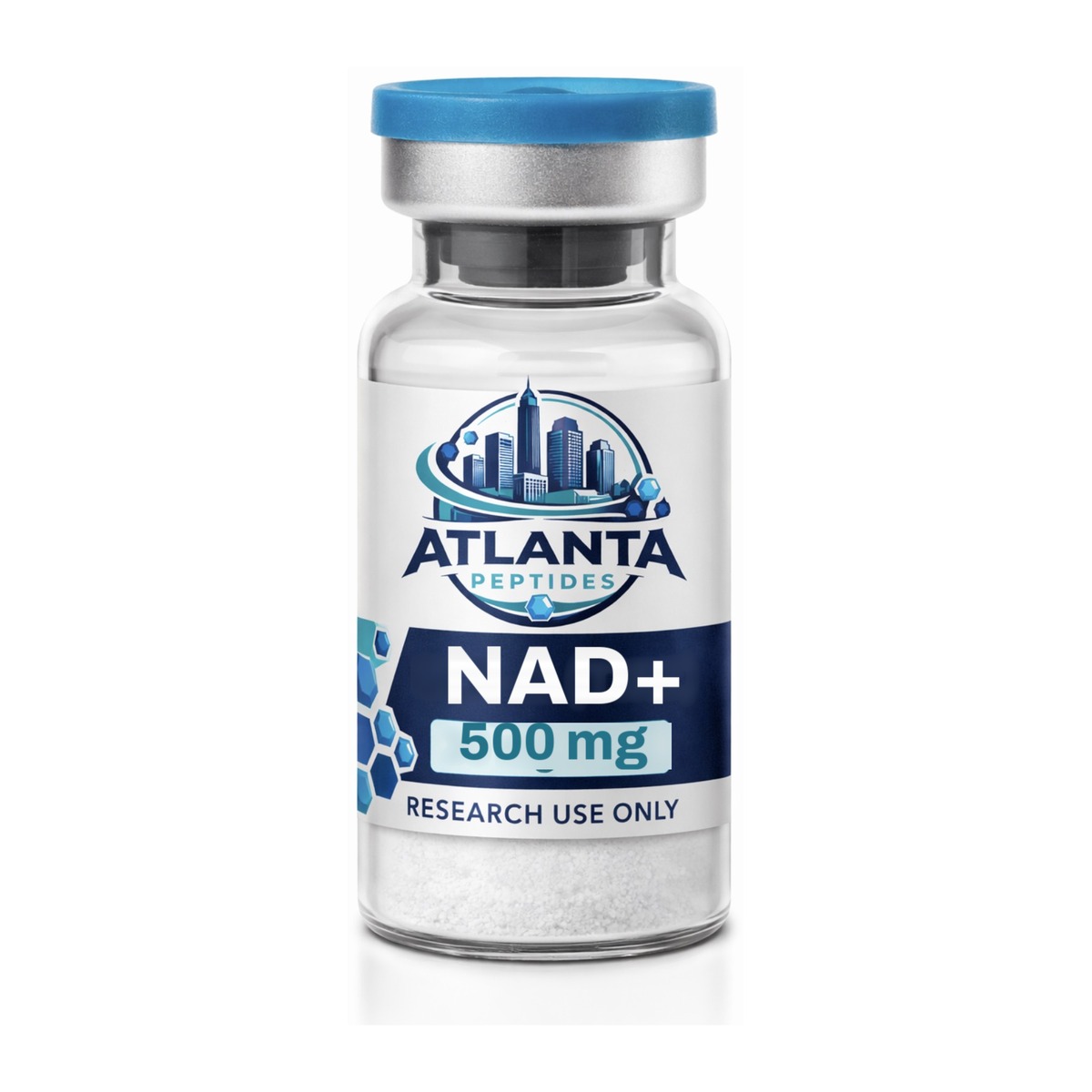
NAD+ in Laboratory Research
NAD+ (nicotinamide adenine dinucleotide) is not a peptide but a dinucleotide coenzyme that sits at the centre of cellular energy metabolism. It shuttles electrons through glycolysis, the TCA cycle and oxidative phosphorylation, and serves as the required substrate for the sirtuin and PARP enzyme families.
Because intracellular NAD+ concentration declines as cells age, it is one of the most heavily used cofactors in metabolic and longevity research, where controlled supplementation of the coenzyme is the experimental variable.
Research Applications & Study Focus
Laboratories apply NAD+ in mitochondrial-function assays, sirtuin-activity work, DNA-repair studies, and cellular-senescence models. It is frequently paired with NNMT inhibitors and other salvage-pathway tools to map how nicotinamide flux feeds the NAD+ pool.
Consistent lot specification lets research groups reproduce redox and energy-metabolism conditions precisely from one experiment to the next.
Purity, Handling & Verification
Each batch is supplied as a sealed, lyophilized vial and is independently analysed by a third-party laboratory using HPLC and mass spectrometry; the full certificate of analysis is published against its lot number, so results can be verified before use. Store the lyophilized material cool, dry and out of direct light, and reconstitute with bacteriostatic water under standard aseptic laboratory practice.
This material is offered strictly for in vitro laboratory research use only. It is not for human or veterinary consumption, and not for diagnostic or therapeutic use.
Reviews
There are no reviews yet.